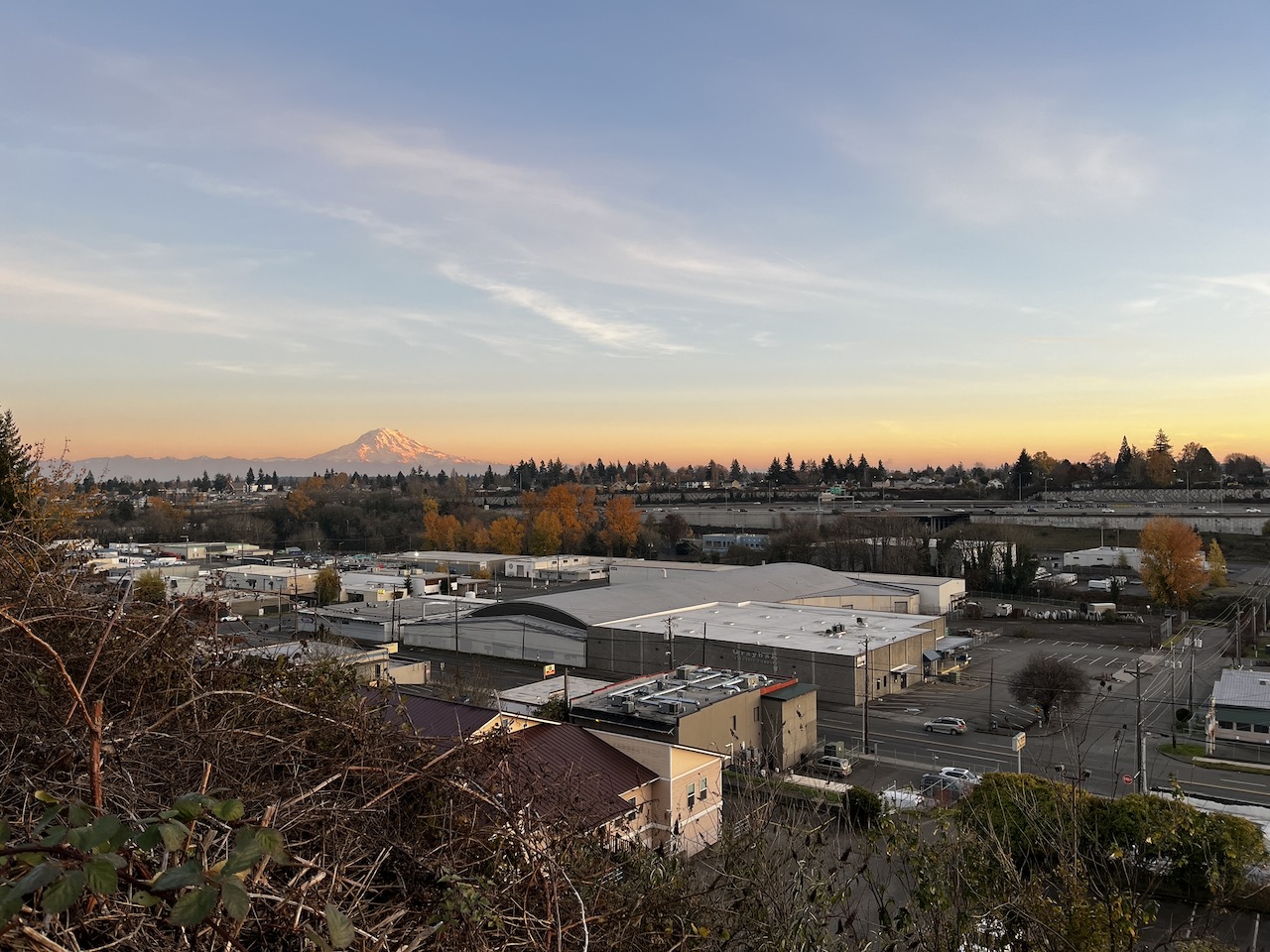
Tacoma’s neighborhoods need more trees
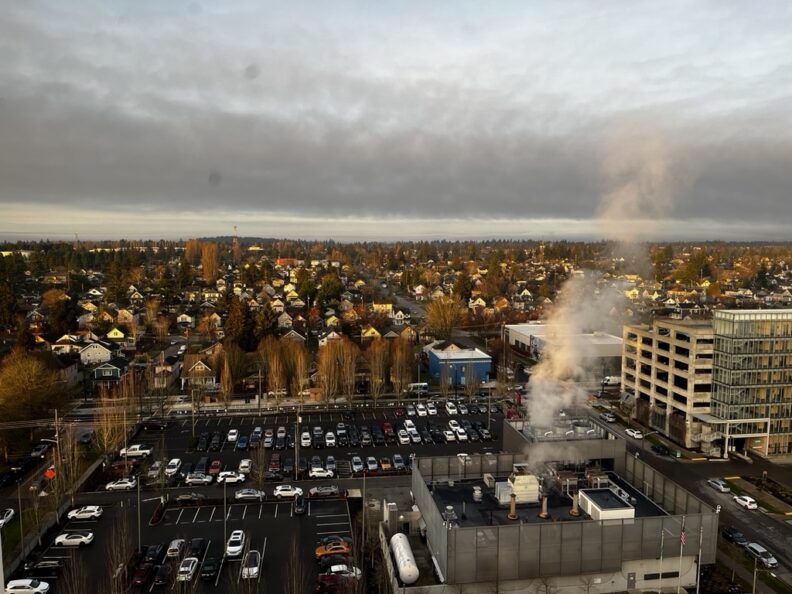
Tree Benefits
Shade for Cooling
- Trees intercept and block sunlight which reduces the amount of solar radiation that can reach below the canopy (Reducing Urban Heat Islands, 2008). Most energy is absorbed by the plant and smaller amounts are reflected or reach beneath the canopy. Consequently, the temperature in areas shaded by tree canopy is reduced (Knight et al., 2021).
Reduced Energy Consumption
- Increasing shade in communities decreases the energy demands for air conditioning and fans during hot summer months (Mcpherson et al., 2005).
Reduced Greenhouse Gas Emissions and Air Pollutants
- Trees intercept pollutants and sequester carbon (Mcpherson et al., 2005).
- Reduced energy use from shading offsets outputs from energy production (Reducing Urban Heat Islands, 2008).
Reduced Air Temperature
- Evapotranspiration is a process in plants that can also reduce air temperatures.
- The cooling effects of evapotranspiration is maximized in parks and green spaces and these cooling effects can extend out past their boundaries and provide cooling for surrounding areas (Knight et al., 2021).
Reduced Stormwater Runoff
- Plant roots uptake and store water which reduces the amount of stormwater runoff (Mcpherson et al., 2005).
- Tree canopies also intercept rainfall, slowing its contact with surfaces. Some water intercepted in the tree canopy is evaporated (Mcpherson et al., 2005).
Enhanced Water Quality
- Water quality improves when water moves through soil and roots of plants that filter out pollutants (Reducing Urban Heat Islands, 2008).
Improved Quality of Life
- Trees can provide beautification, privacy, and a sense of wellbeing and place (Hartig et al. 2011).


Articles About Tacoma and it’s Trees
The Urban Heat Island Effect: A Growing Threat to Human Health in Tacoma
By Lowell Wyse
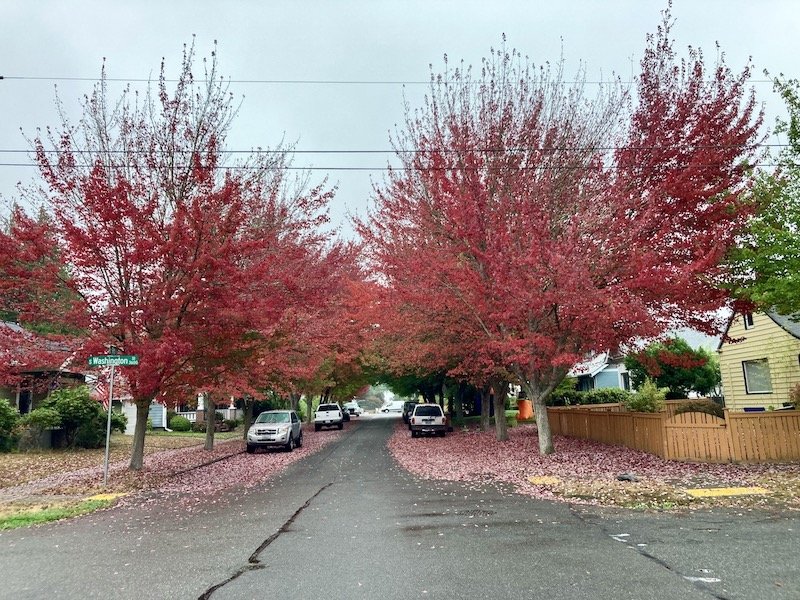
Healthy Maples, Healthy Communities
By Joey Hulbert
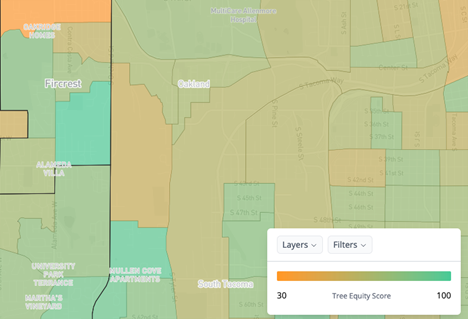
A Tale of Two Cities
By Lowell Wyse
Tacoma Urban Forestry
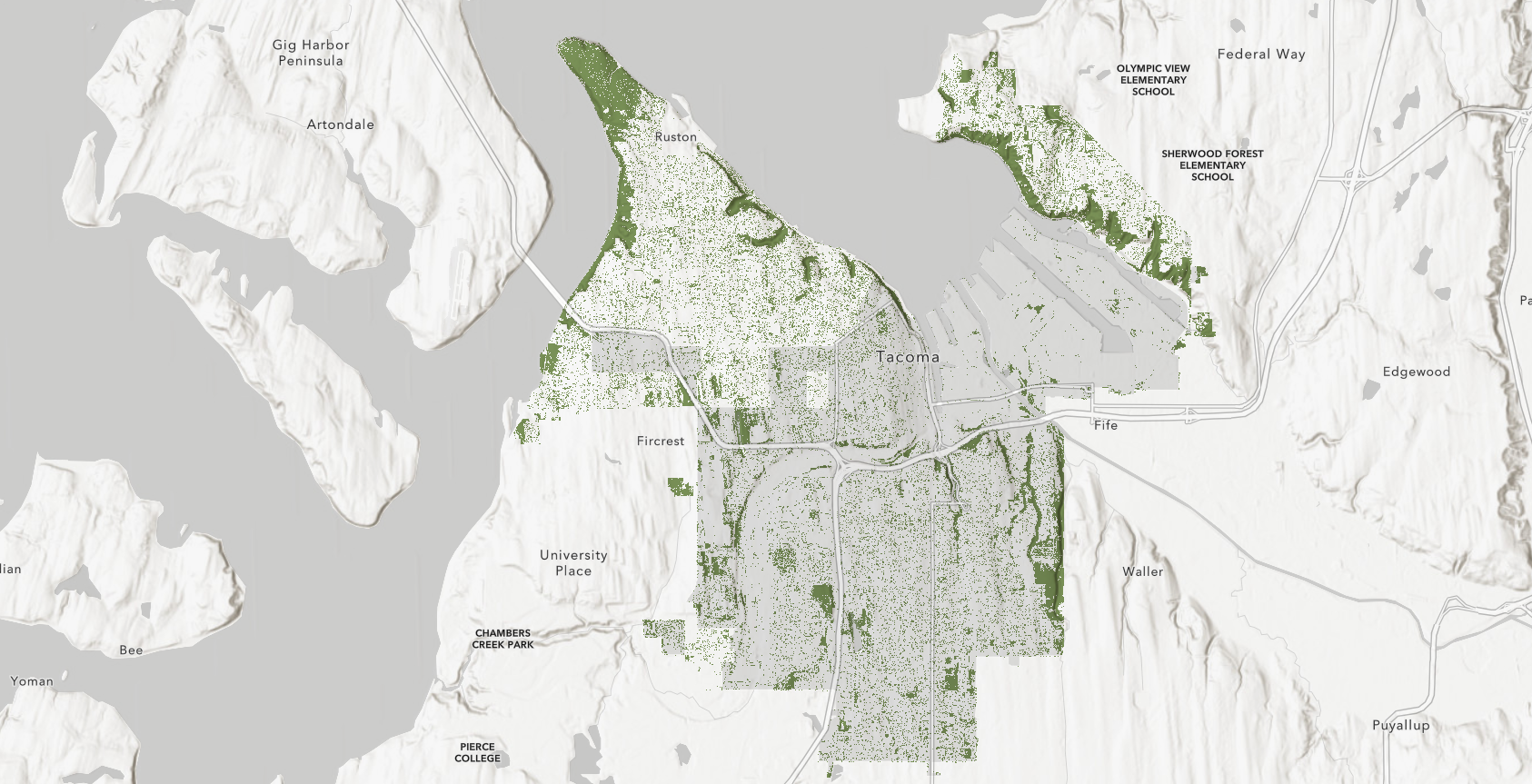
Tacoma Community Forest: The Intersection of Trees, Equity, and Human Health
Tree Resources
- Tree Coupons Program – Tree coupons are valid for $30 off each tree purchased, up to three trees per coupon, at select local tree retailers. These trees are for residential property and may be planted on your private property or in right-of-way abutting your property.
- Grit City Trees – Grit City Trees is the City of Tacoma’s annual free street tree program for Tacoma residents aiming to plant trees in the right of way. This program is for Priority Planting Areas although any property owner can apply.
- Tacoma Tree Foundation Tree Give Aways – Free tree giveaway events are hosted throughout the year across Tacoma and Pierce County. Tacoma Tree Foundation is focused on bringing trees and plants to the areas where they can have the most social and environmental impact.
- Urban Tree Sale – Pierce Conservation District’s Urban Tree Sale aims to help residents in Tacoma, Puyallup, and unincorporated Pierce County receive significantly discounted trees and provides the resources necessary to properly plant them around their homes.
- Pierce Native Plant Sale – A nonprofit sale run by the Pierce Conservation District – with a mission to get environmentally friendly native plants to our residents as easily and cheaply as possible.
- Pierce County Parks Tree Give Aways – Free Tree Giveaways events occur each year from October through April at a variety of park sites.
References
Hartig, Terry, Agnes van den berg, Caroline Hägerhäll, Marek Tomalak, Nicole Bauer, Ralf Hansmann, Ann Ojala, et al. (2010). “Health Benefits of Nature Experience: Psychological, Social and Cultural Processes.” In Forests, Trees and Human Health, 127–68. https://doi.org/10.1007/978-90-481-9806-1_5.
Knight, T., Price, S., Bowler, D., Hookway, A., King, S., Konno, K., & Richter, R. L. (2021). How effective is “greening” of urban areas in reducing human exposure to ground-level ozone concentrations, UV exposure and the “urban heat island effect”? An updated systematic review. Environmental Evidence, 10(1), 1–38. https://doi.org/10.1186/s13750-021-00226-y
Mcpherson, G., Simpson, J., Peper, P., Maco, S., & Xiao, Q. (2005). Municipal Forest Benefits and Costs in Five US Cities. Journal of Forestry. 103(8): 411-416. https://www.fs.usda.gov/psw/publications/mcpherson/psw_2005_mcpherson003.pdf
Reducing Urban Heat Islands: Compendium of Strategies. (2008). In United States Environmental Protection Agency. https://www.epa.gov/sites/default/files/2017-05/documents/reducing_urban_heat_islands_ch_1.pdf