Sudden Oak Death
Introduction
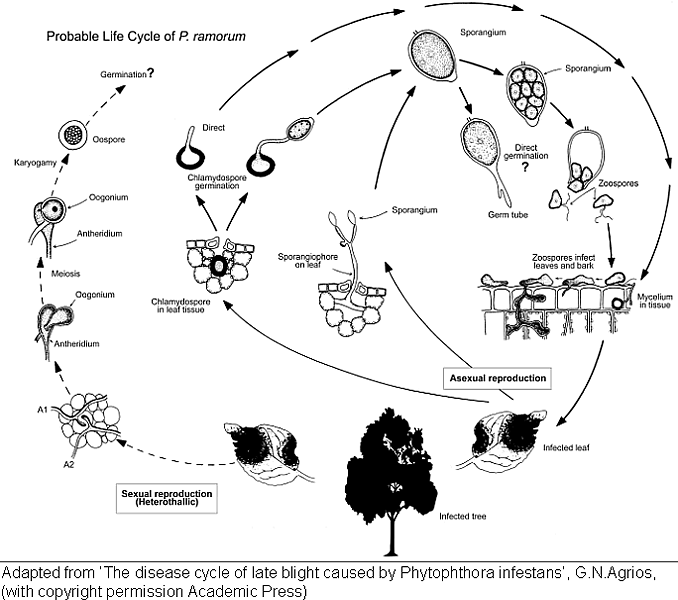
Ramorum blight and sudden oak death are diseases caused by Phytophthora ramorum, an introduced microbe. The plant diseases were first detected in the U.S. in California in 1995.
Symptoms
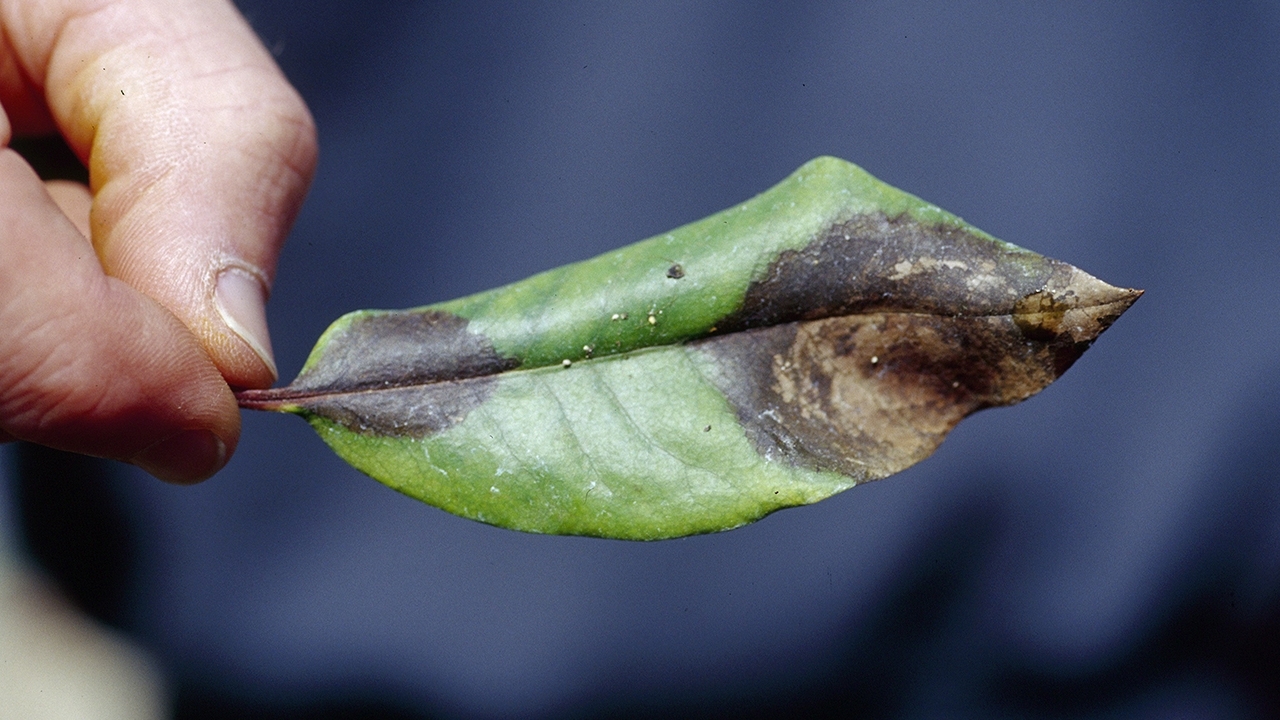
Joseph Obrien, USDA Forest Service.
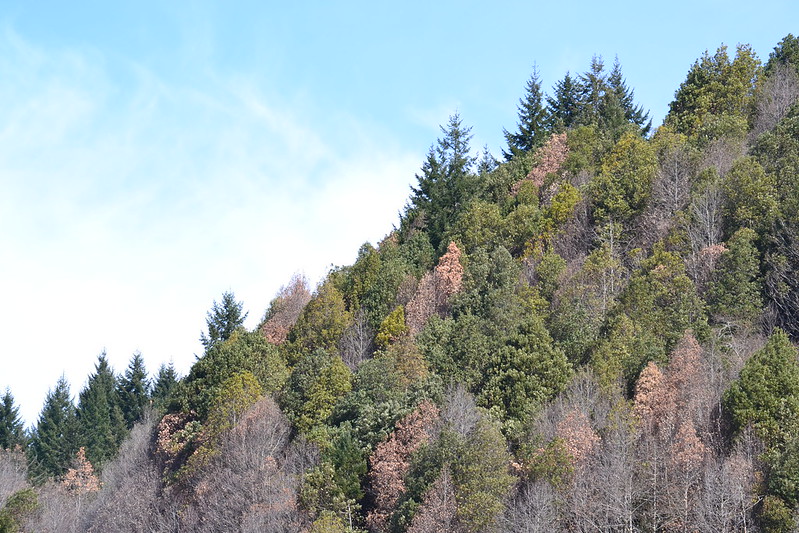
Photo by Joey Hulbert
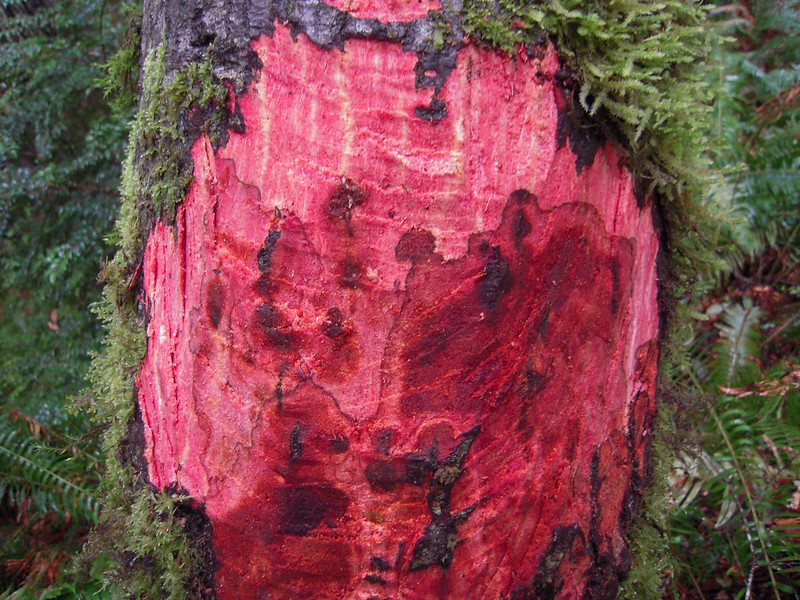
Common symptoms include wilting and leaf drop. Shoots and stems may look dead with blackened margins growing up or downward along the stems. Dead cambial tissues can also be observed after removing inner bark on unhealthy trees. Many plants completely die when infected, but some can tolerate the presence of the pathogen and serve as a source of inoculation for other nearby plants (e.g. California bay laurel / Oregon myrtle) .
Impact
Sudden Oak Death has killed hundreds of thousands of oak and tanoak trees in California. The disease attacks over 100 plant species in more than 37 different plant families.
Phytophthora ramorum has only been recovered from Washington, California, Oregon, several European countries, the United Kingdom, and Vietnam. In Washington and Oregon, P. ramorum is found in mainly ornamental plant nurseries.
Washington State
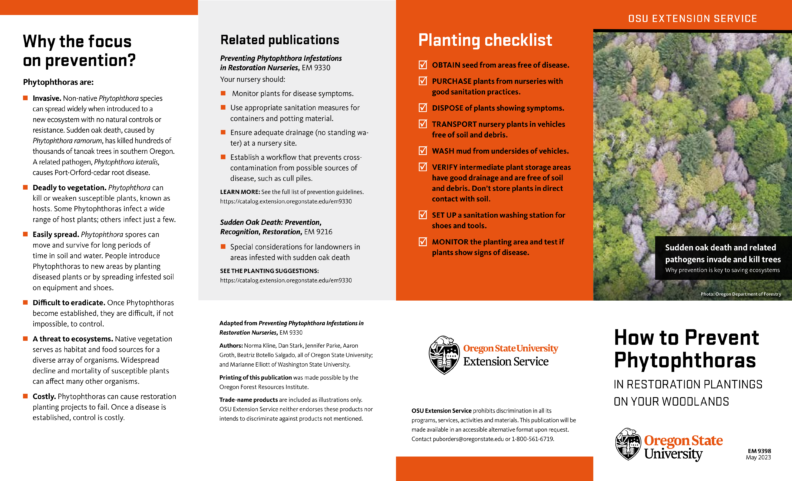
Phytophthora ramorum has been present in Washington state since 2004, yet no forest outbreaks have occurred as they have in California, Oregon, and the UK. This may not be the case with the next invasive plant pathogen, therefore the use of Best Management Practices (BMPs) for growing clean plants is important for nurseries to adopt.
Resources
Best Management Practices