Western Redcedar Dieback
Introduction
Icon of the Pacific Northwest
Western redcedar (Thuja plicata) is a quintessential species of the Pacific Northwest because of its rich cultural value.
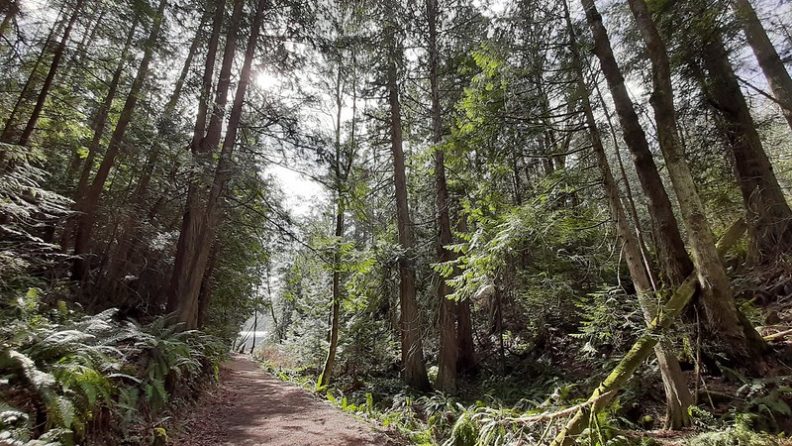
The massive size of many trees throughout the region is testament to its capacity for long-term survival. Even after a tree has fallen, its bole can remain largely intact on the ground for centuries.
Western redcedar grows widely throughout our region because of its tolerance to shade, flooding and nutrient poor soils. However, recent observations of dieback and mortality have raised concern about its ability to cope with changes in the climate.
Importance
The western redcedar is critically important to conserve because of its ecological, cultural, and economic value.
Ecologically, it provides habitat and nourishment for many mammal and bird species. Its tolerance to very wet soils allows it to flourish where other conifer species cannot.
Commercially, it is valued highly because of its durability and resistance to wood-rotting fungi. It is also used widely in restoration activities locally, and as an ornamental species internationally.
Culturally, western redcedar is considered a Cultural Keystone Species because of its multiple uses and value to indigenous North American communities (read more below).
Dieback
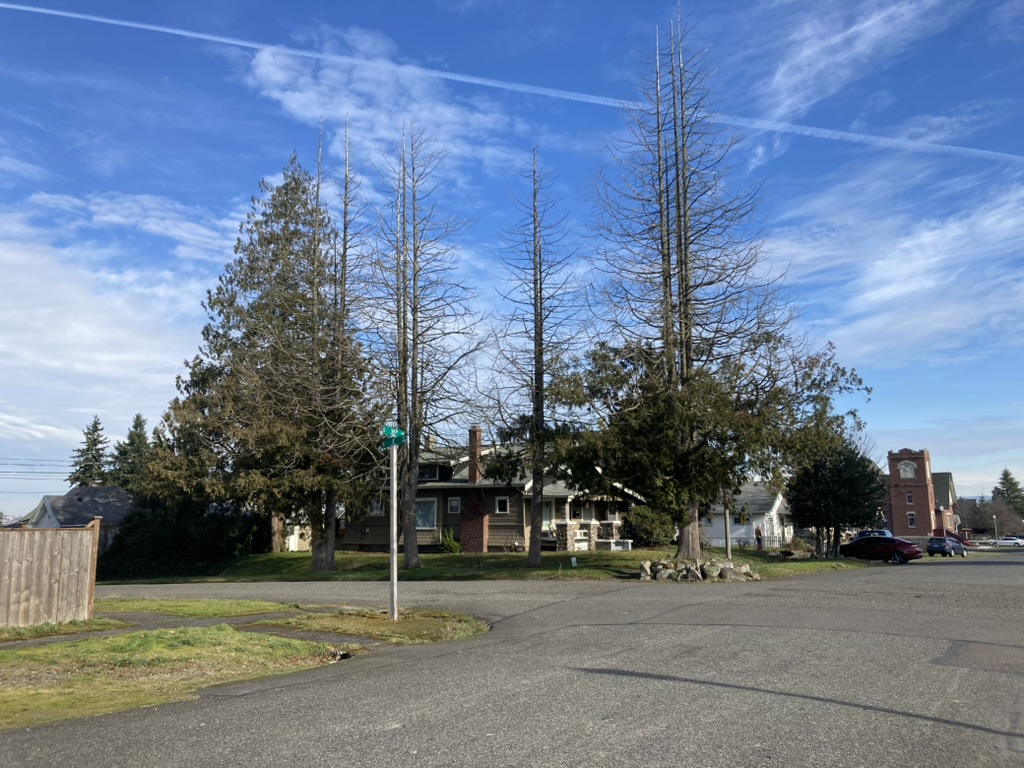
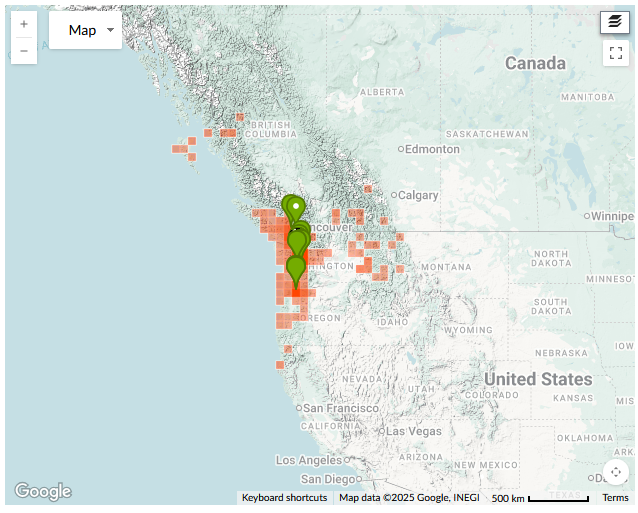
The dieback of Western Redcedar has been observed throughout the northwest and concern is growing about their survival in future climates. Western Redcedar dieback has occurred in many forested areas over the last few years, as we have been experiencing hotter and drier summers.
The Western Redcedar’s dieback may even be occurring at a more alarming rate than other native tree species in similar forested biomes. If these unfavorable conditions persist, the changes that are occurring may outpace the trees’ abilities to adapt, leading to partial canopy dieback or mortality.
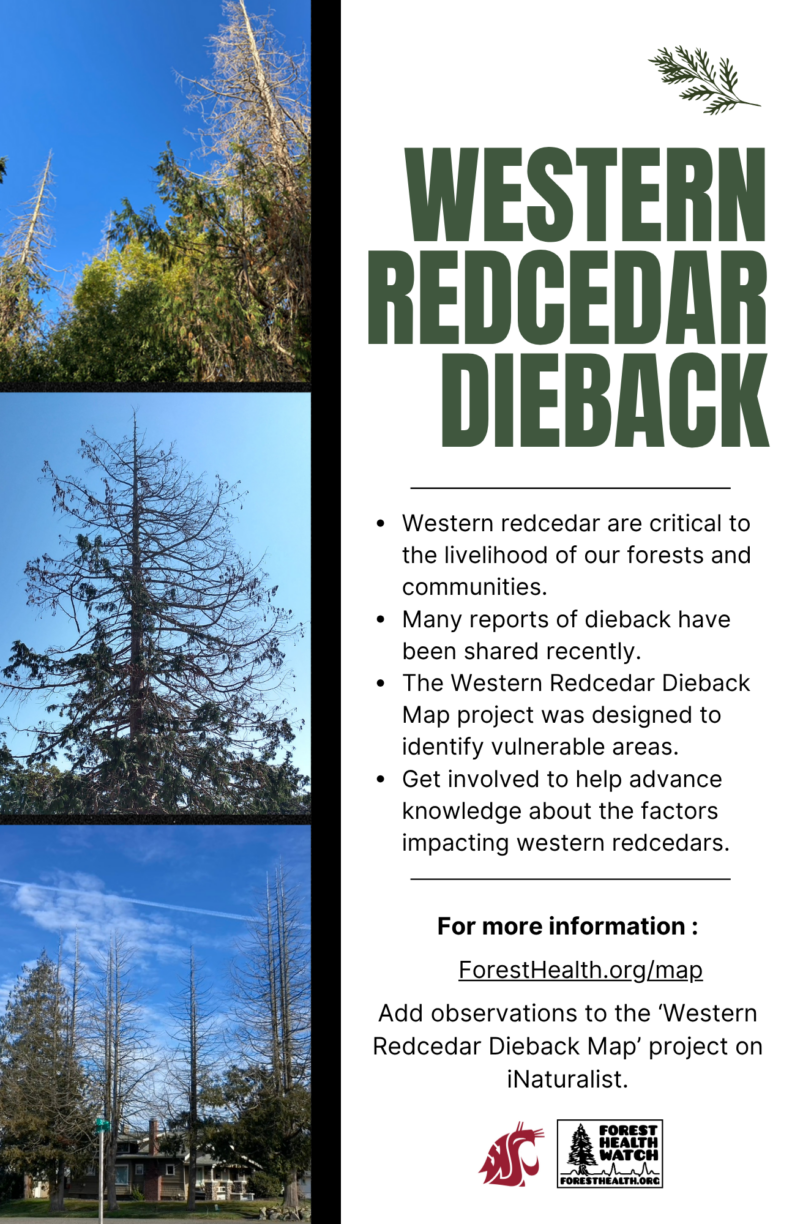
Symptoms
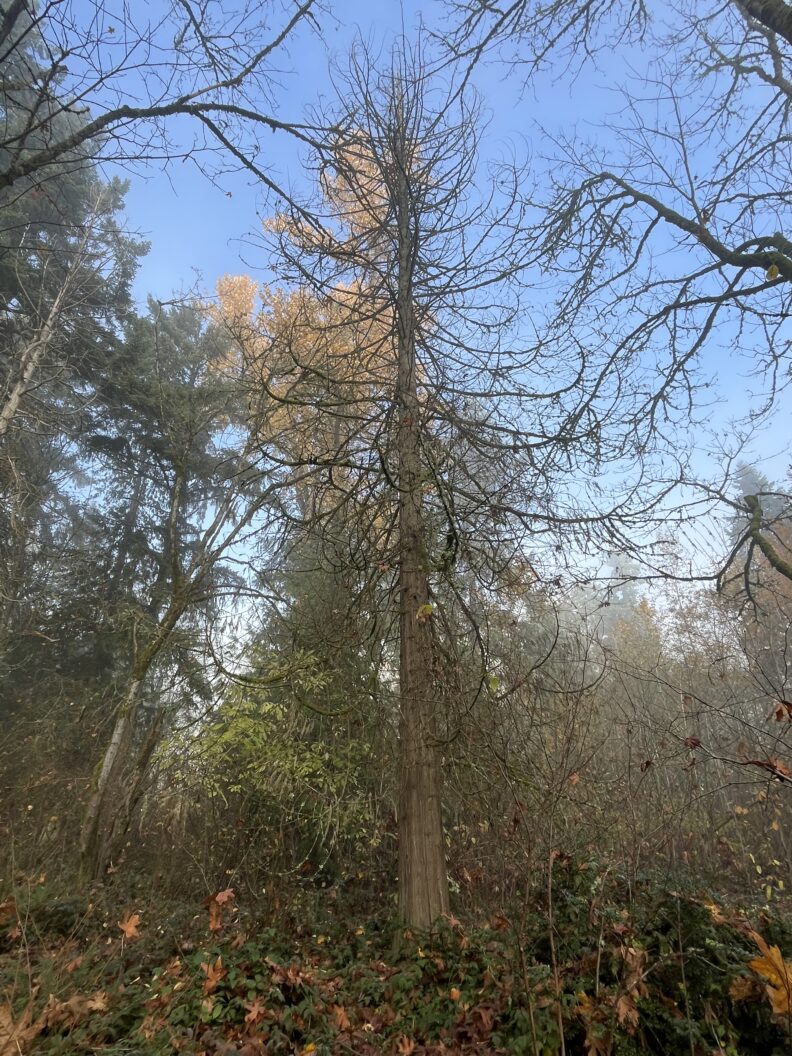
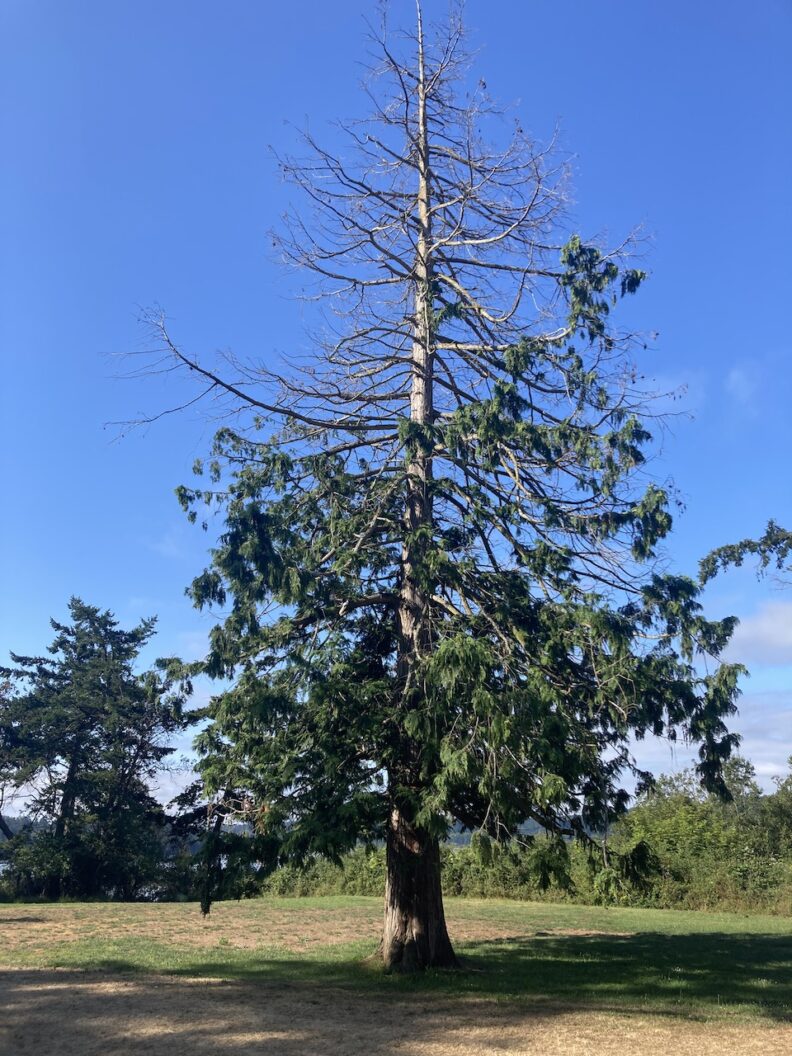
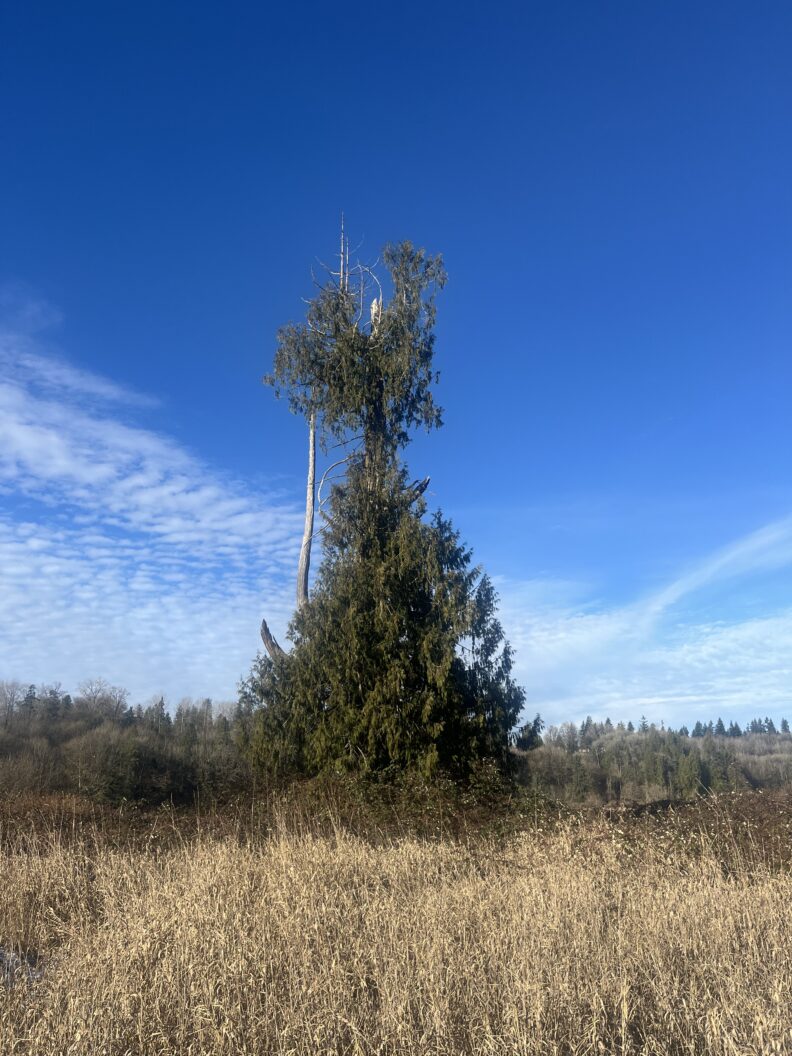
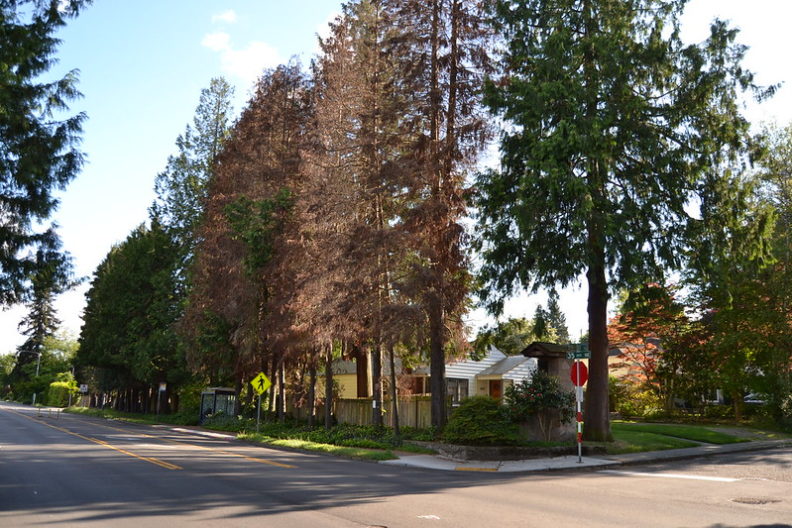
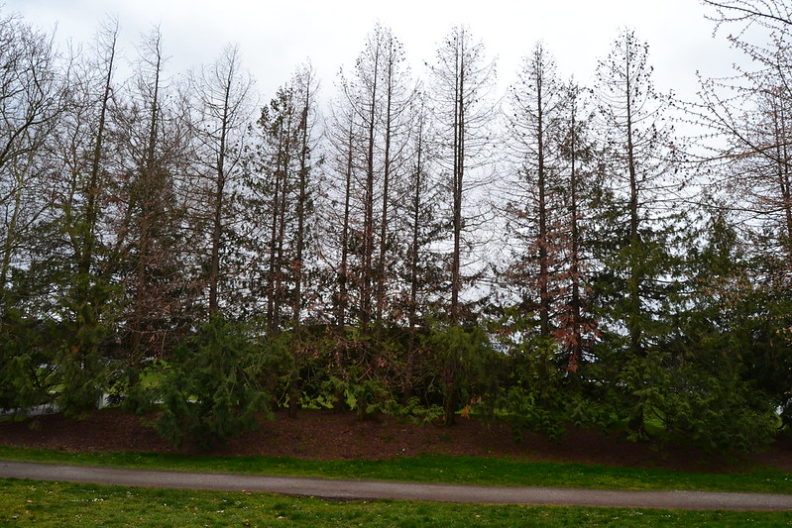
Symptoms of Western Redcedar dieback trees is thinning crowns, flagging, yellowing or browning of foliage, dying tops and mortality.
Similar Species
Distinctions
Yellow Cedar has spiky edges to its compound alternate needles.
Port Orford Cedar has smooth scalloped edges to its simple alternate needles.
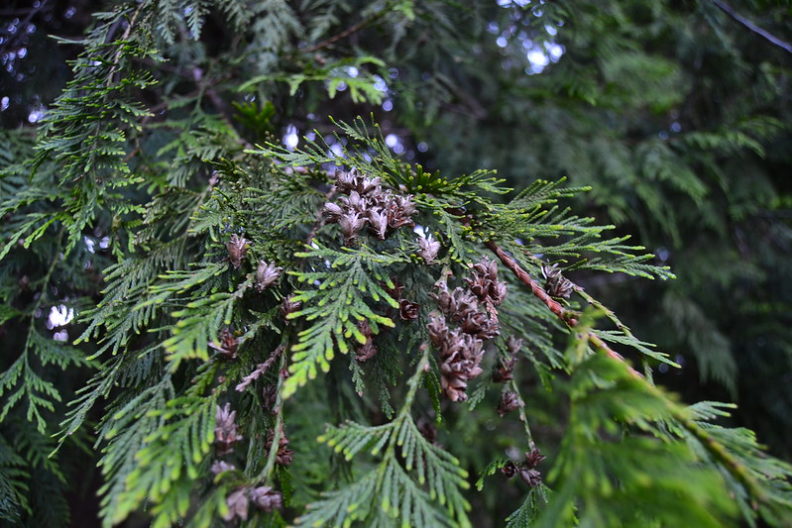
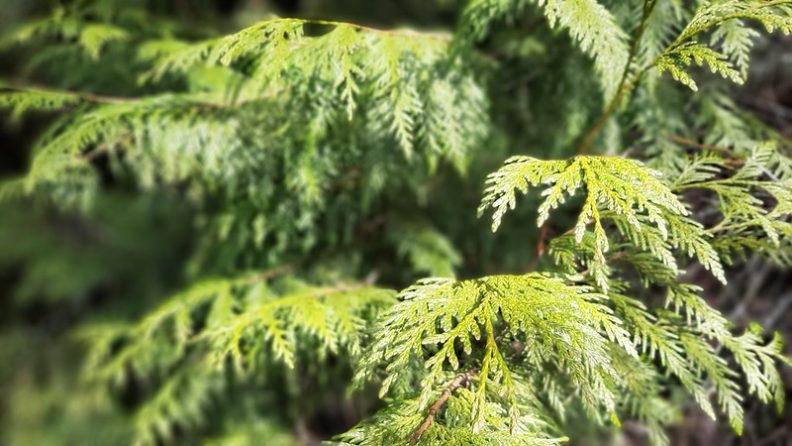
Western Redcedar has similar needles to the Port Orford Cedar. The Redcedar needles in this picture are tighter together and slightly darker green than the Port Orford needles.
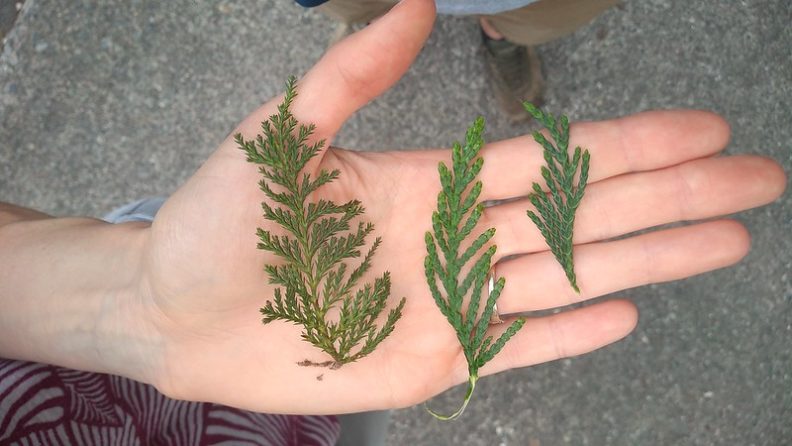
Yellow Cedar
Be careful not to confuse yellow cedar with western redcedar. Yellow cedar is best adapted for conditions in Alaska, but the range extends into Washington.
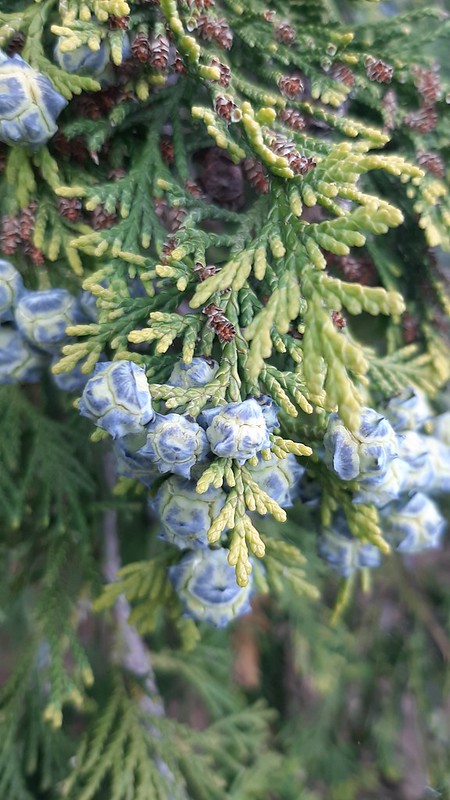
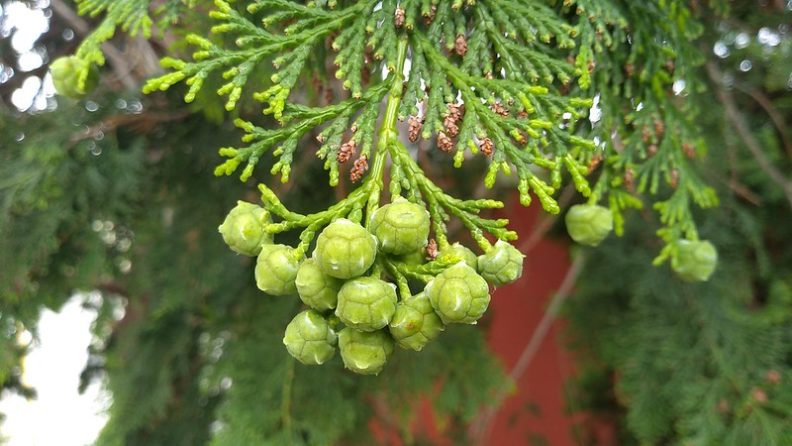
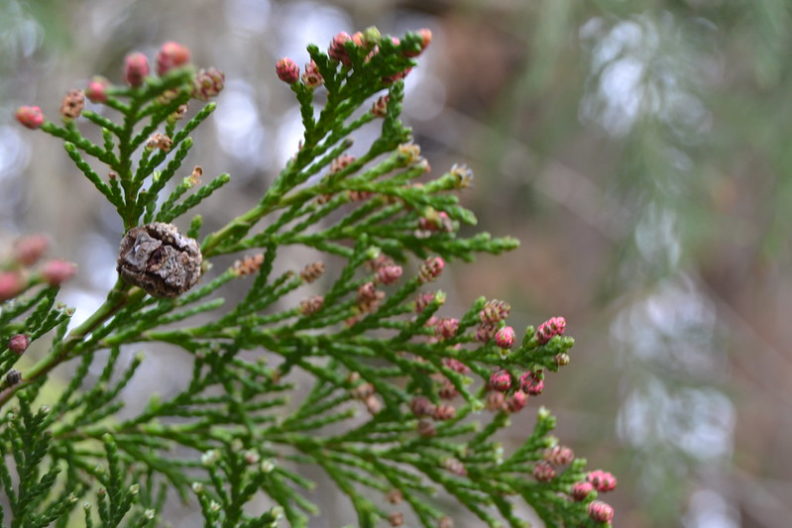
Port Orford Cedar
Port Orford cedar is another cedar that can be confused with western redcedar. This species is most abundant in coastal Oregon and northern California, but is commonly planted as an ornamental species.
Both species are also planted widely throughout the urban areas of cities such as Seattle.
Get Involved & Learn More
Forest Health Watch
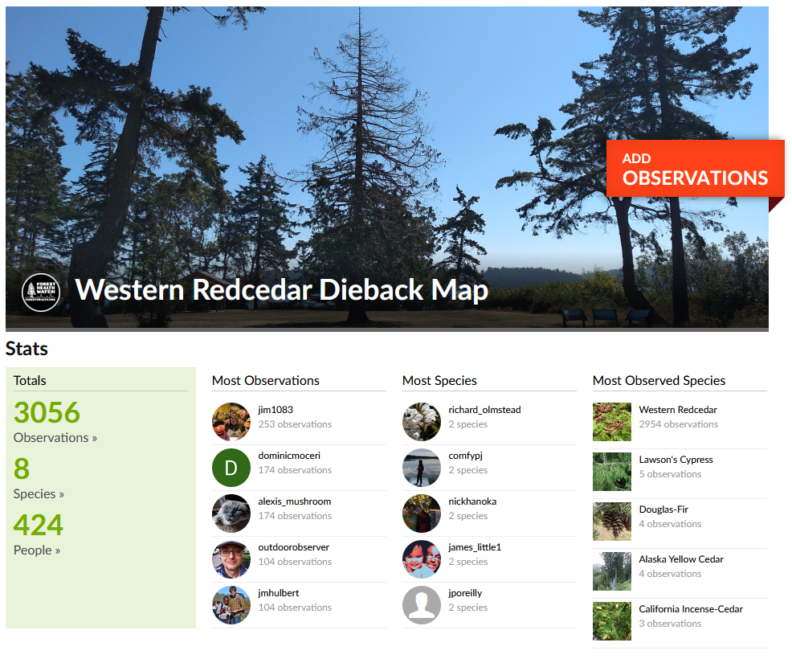
We’ve launched the Forest Health Watch program to host research projects that anyone can contribute to as community scientists. Check out the webpage or join the Western Redcedar Dieback Map project on iNaturalist.org to contribute.
Get Involved in the Forest Health Watch

iNaturalist – Western Redcedar Dieback Map
Share Observations
Help accelerate the research by sharing observations of healthy and unhealthy western redcedar trees. Join the Western Redcedar Dieback Map project and share your observations with us on iNaturalist.org. Find more instructions on our website.
Western Redcedar Dieback – WSU CAHNRS YouTube
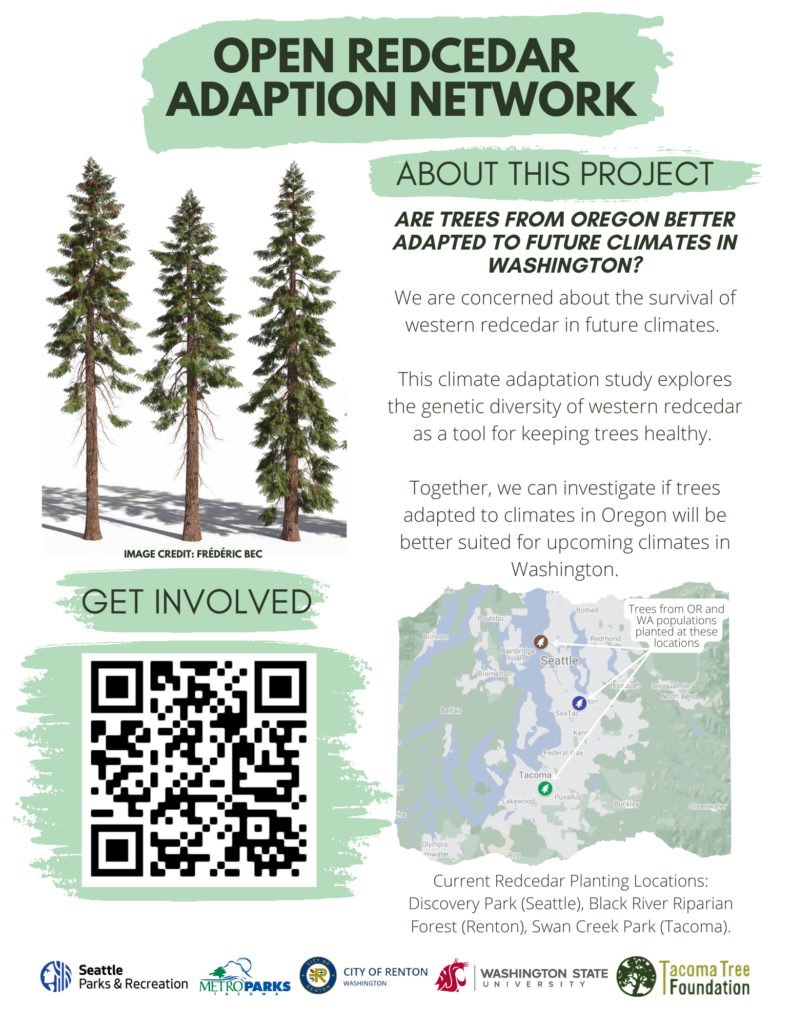
Open Redcedar Adaptation Network
Resources
Western redcedar dieback
Publications
- Andus, Robert. 2024. Western Redcedar Dieback (PDF). US Forest Service, USDA.
- Andrus, R. A., Lulu Rosemary Peach, Cinquini, A., Benjamin, Yusi, J., Buhl, C., Fischer, M. A., Goodrich, B. A., Hulbert, J. M., Holz, A., Arjan J. H. Meddens, Moffett, K. B., Ramirez, A., & Adams, H. D. (2023). Canary in the forest?—Tree mortality and canopy dieback of western redcedar linked to drier and warmer summers. Journal of Biogeography, 51(1), 103–119. https://doi.org/10.1111/jbi.14732
- Liu, J.-J., Houston, S., Cruickshank, M., Zamany, A., Leal, I., & Filipescu, C. (2025). Controlled inoculation provides insight into western redcedar resistance to multiple root- and butt-rot pathogens. Frontiers in Plant Science, 16. https://doi.org/10.3389/fpls.2025.1669570
- Aldana, J. A., Moa, B., Mattsson, J., Russell, J. H., & Hawkins, B. J. (2024). Histological, chemical and gene expression differences between western redcedar seedlings resistant and susceptible to cedar leaf blight. Frontiers in Plant Science, 15. https://doi.org/10.3389/fpls.2024.1309762
Story Maps
- Buhl, C., Fischer, M., and Goodrich, B. Western Redcedar Dieback. 2025. ArcGIS Storymap.
Western redcedar as cultural resources
Books
- Moerman DE. Native American ethnobotany. Timber press; 1998.
- Pojar J, MacKinnon A, Alaback PB. Plants of coastal British Columbia. Lone Pine Publishing; 1994.
- Stewart H, Cedar: Tree of Life to the Northwest Coast Indians, Douglas & McIntyre, University of Washington Press; 1995.
Publications and Reports
- Garibaldi, A., and N. Turner. 2004. Cultural Keystone Species: implications for ecological conservation and restoration. Ecology and Society 9.
- Klinka, K., and D. Brisco. 2009. Silvics and silviculture of coastal western redcedar: a literature review (PDF). Special Report Series – Ministry of Forests and Range, British Columbia.
- Hebda, R. J., and R. W. Mathewes. 1984. Holocene history of cedar and native indian cultures of the North American Pacific Coast. Science 225:711–713.
- Nelson, J. 2004. A Vanishing Heritage: The Loss of Ancient Red Cedar, David Suzuki Foundation.
Websites
- Ancient Peoples and Area Tribes, Olympic National Park, Washington.
- Cedar, Indigenous Foundations, University of British Columbia.
Western redcedar biology and ecology
Identification
- USDA Plant Profile
- Woodland Trust
- Trees on the Trails, Washington Trails Association (PDF)
- Trees for Seattle, City of Seattle
- Native Plants PNW
- Natural Resources Canada
- The Jepson Herbarium
Biology and Ecology
- Western redcedar (Thuja plicata) (PDF), Washington State Department of Natural Resources
- Thuja plicata, The Gymnosperm Database
- False Cedars, Common Trees of the Pacific Northwest, Oregon State University
- Index of Species Information, Fire Effects Information System, USDA Forest Service
- Western redcedar: ‘Tree of Life’ (PDF), Oregon Department of Forestry
- Western Redcedar, Silvics of North America, USDA
Distribution
- Regional distribution, USDA Forest Service Southwest Research Station
- Global distribution, iNaturalist
- United States distribution, Individual Tree Species Parameter Maps, USDA Forest Service
- Current and predicted range, Data Basin
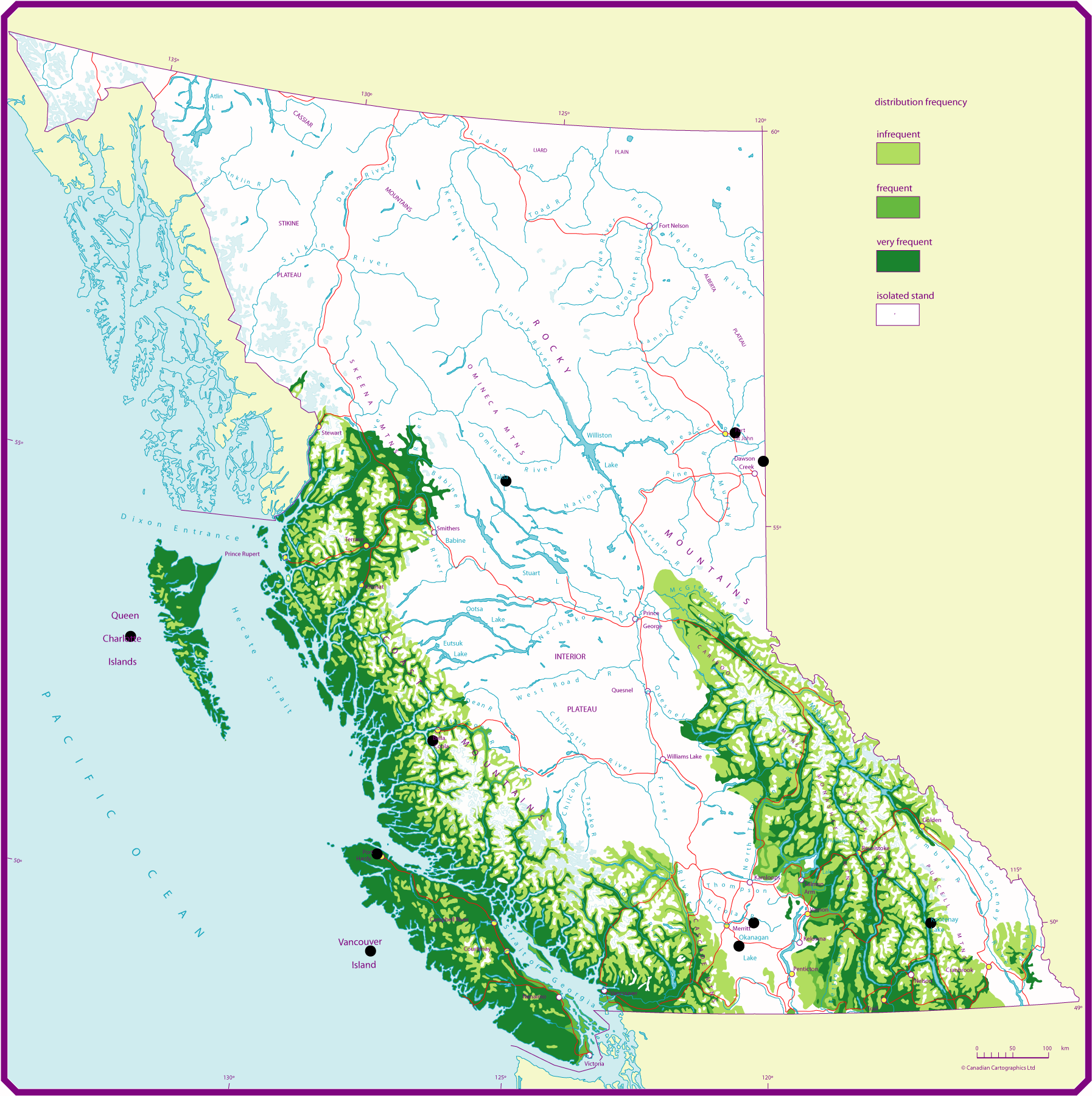
- Western Redcedar BC distribution, Government of British Columbia
Ethnobotany
- Native American Ethnobotany Data Base, University of Michigan
Relevant Pests and Diseases
- Cedar leaf blight, Pacific Northwest Pest Management Handbook, Oregon State University.
- Cedar flagging, Pacific Northwest Pest Management Handbook, Oregon State University.
- Cedar flagging, Hortsense, Washington State University Extension.
- Pests and disorders of Platycladus and Thuja spp., Statewide Integrated Pest Management Program, University of California.
- Cedar bark beetle, University of British Columbia
- Bark beetles of Cupressaceae, Department of Forest Protection, BFW, Federal Ministry Republic of Austria
- Western cedar borer beetle (PDF), University of British Columbia