Spotted Lanternfly
Introduction
The Spotted Lanternfly, Lycorma delicatula is an invasive plant-hopper from Eastern Asia that was first discovered in Pennsylvania in 2014. Since then its spread along the American east coast and 18 other states have had varying degrees of infestation. Two cases of dead specimen of The Spotted Lanternfly were found in California and Oregon as well. Although the Spotted Lanternfly is not currently in Washington state, it’s arrival here would be devastating to our specialty crops and trees.
The Spotted Lanternfly’s preferred host is tree of heaven, Ailanthus altissima, but also has 172 other host plants it will feed upon. These host plants range from grapes, hops, stone fruits and fruit and hardwood trees.
Life stages
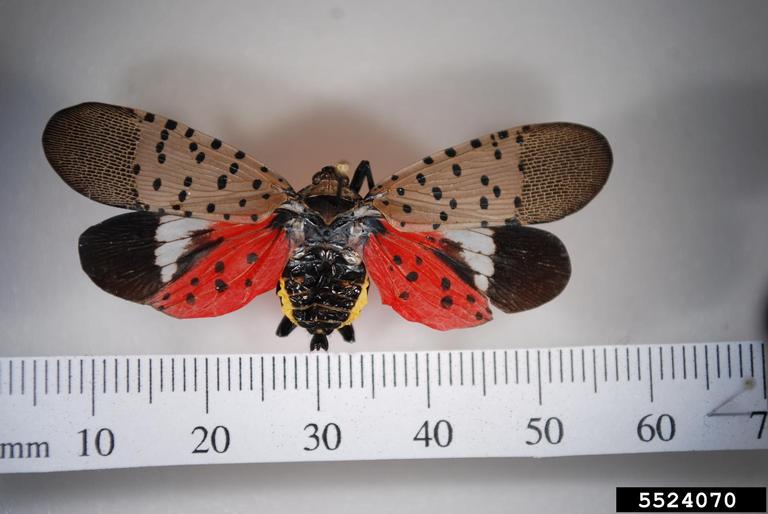
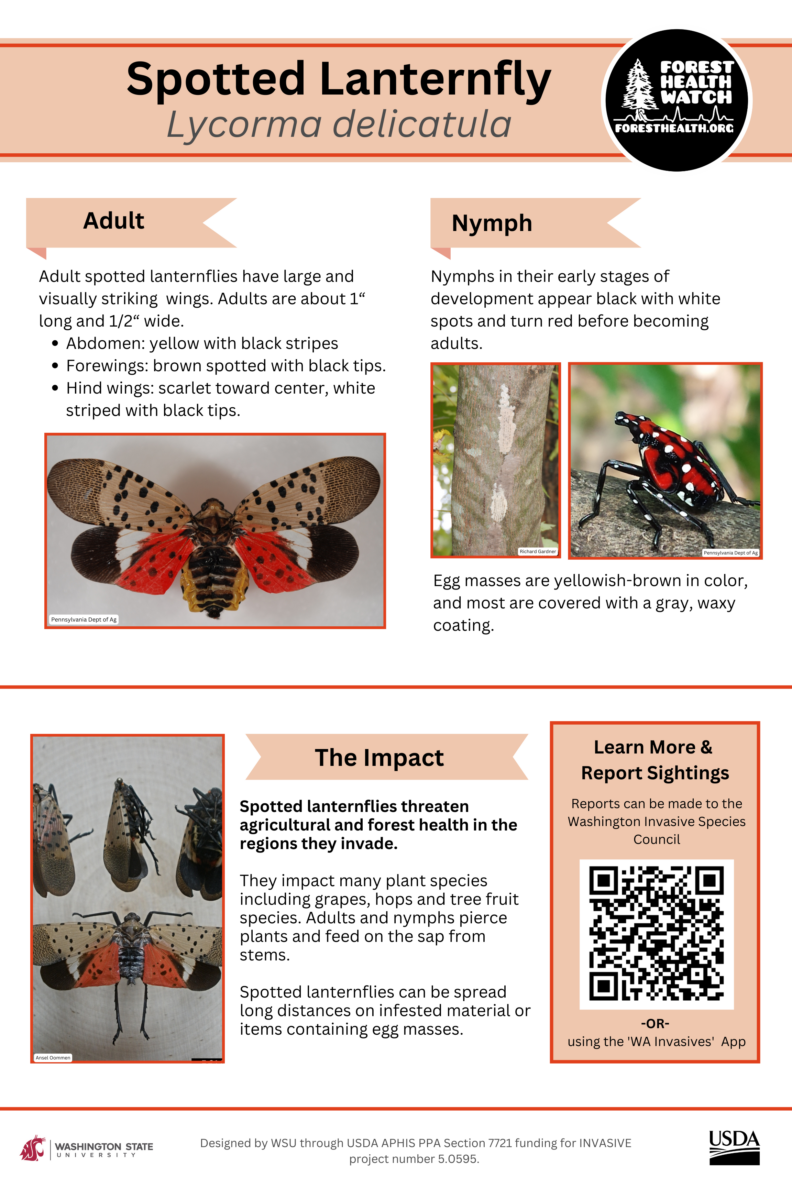
Spotted Lanternfly only has one generation per season. Over winter, they lay egg masses with 30-50 eggs per egg mass. The Spotted Lanternfly can emerge from eggs as early as April. Eggs are yellowish-brown and covered in a waxy, grey coating. After emerging from their eggs, they undergo four instar development stages. Between August and September, they begin to morph into adults. Adults are 1″ long and 1/2″ wide with black striped abdomen and large, visually striking wings.
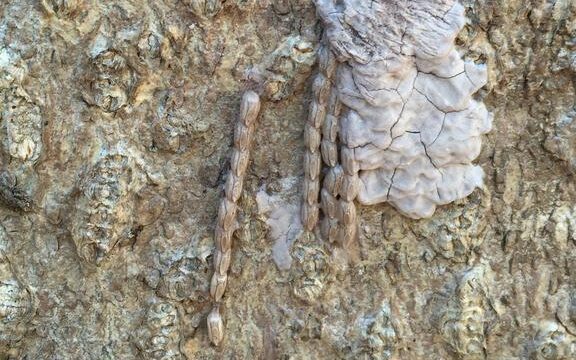
photo by Emelie Swackhamer, Penn State University
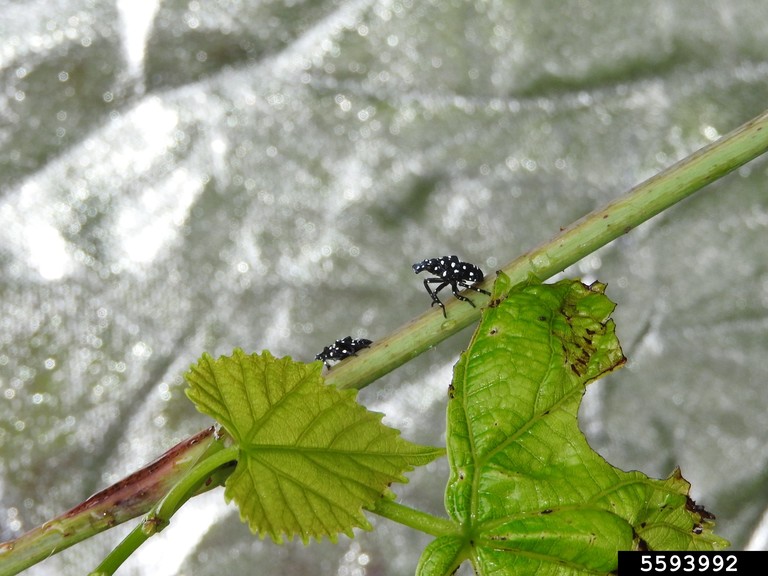
photo by Richard Gardner
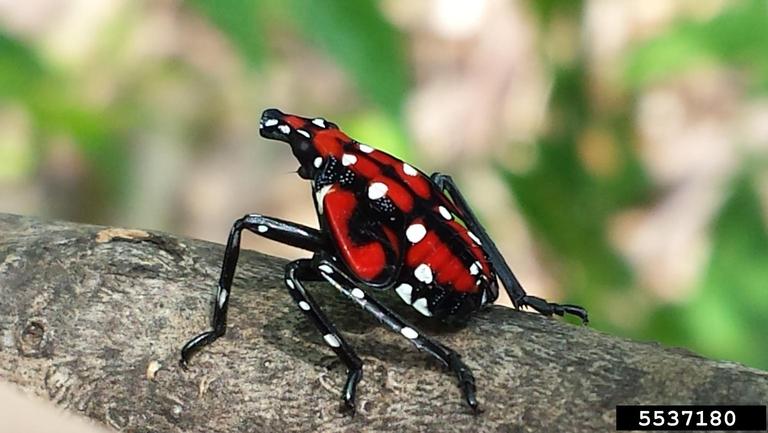
photo by Lawrence Barringer, Pennsylvania Department of Agriculture
What to look for: Signs & Symptoms
The Spotted Lanternfly will leave very visual indicators on an infected tree such as sap oozing, wilting foliage, and a clear , sticky substance called honeydew at the bottom of the tree. Black fungus called sooty mold will also grow on top of the honeydew. The presence of exposed honeydew may even lead to increased activity of ants, bees, and wasps.
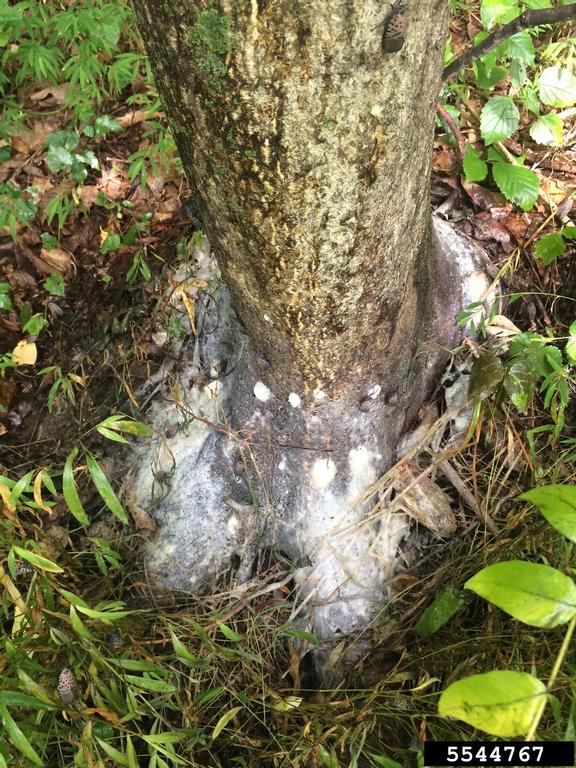
photo by Lawrence Barringer, Pennsylvania Department of Agriculture
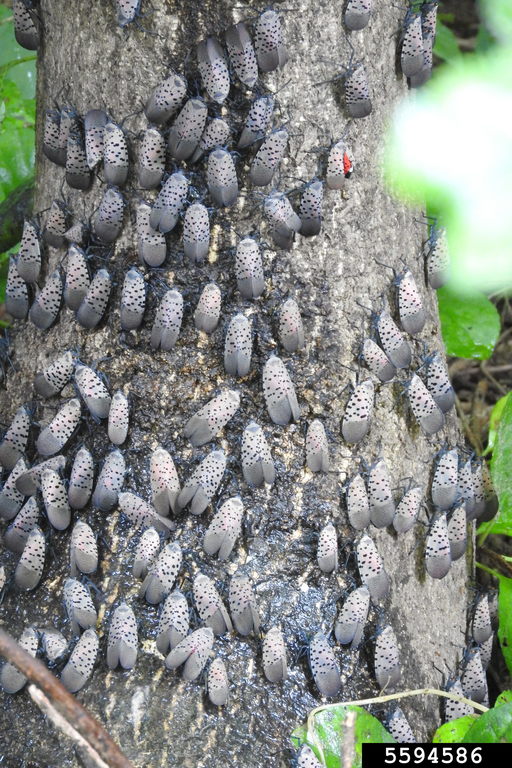
photo by Richard Gardner
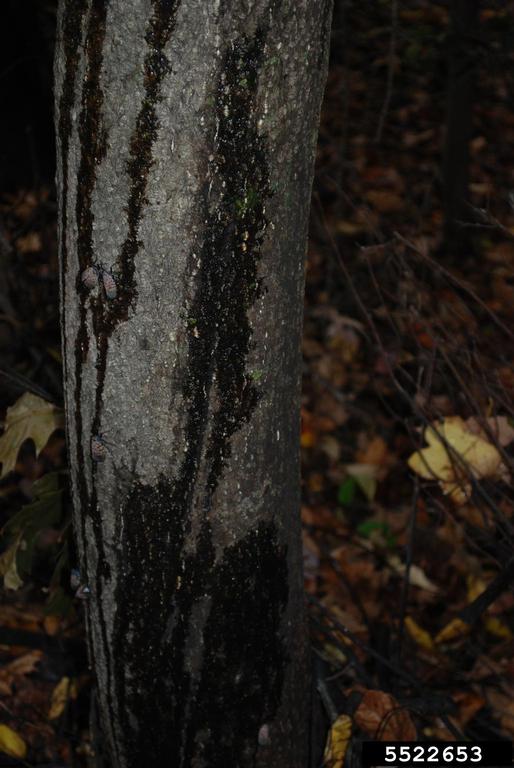
photo by Pennsylvania Department of Agriculture