Mediterranean Oak Borer
Introduction
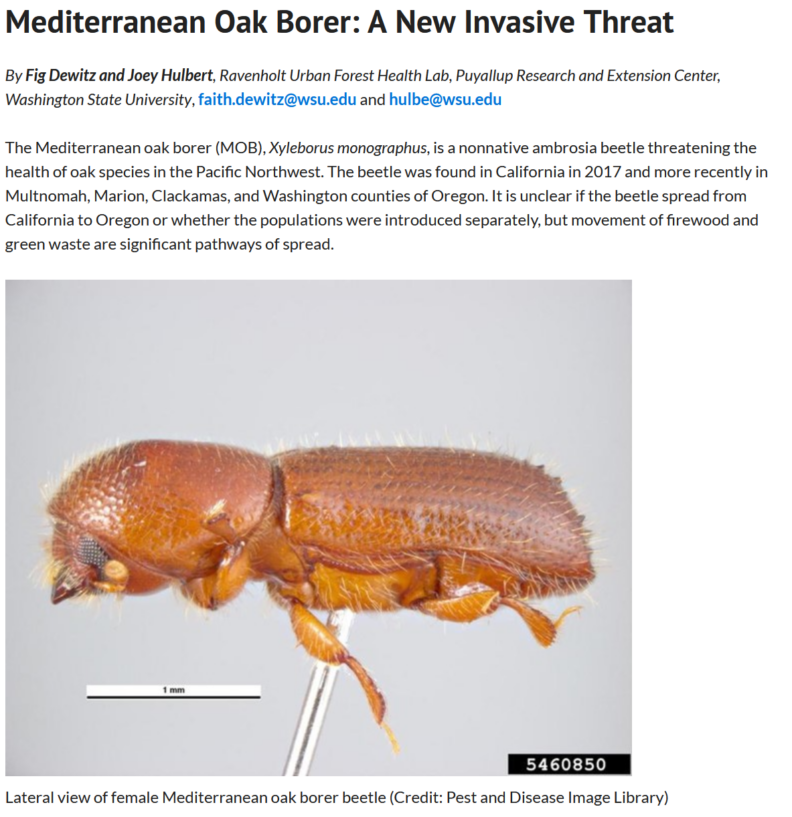
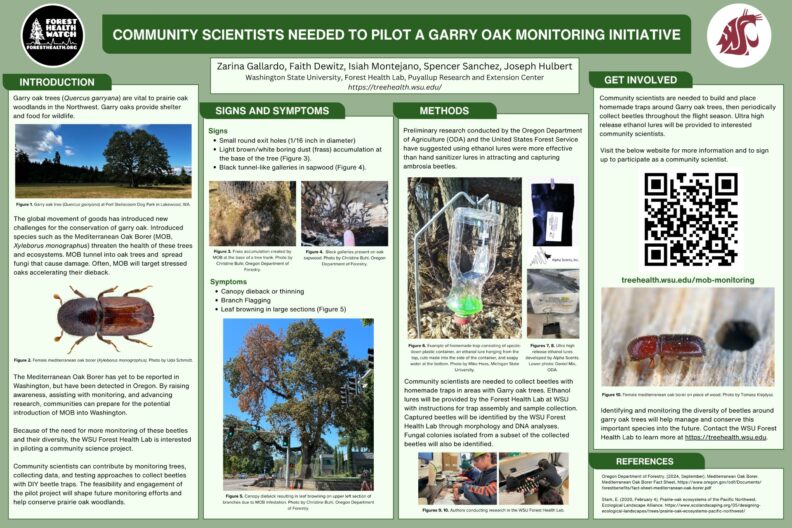
The Mediterranean Oak Borer (MOB), Xyleborus Monographus is an invasive ambrosia beetle originating from the Mediterranean regions of Europe, Africa, and the Middle East.
In 2017, the beetle was found in California, and more recently, the beetle has been found in the Multnomah, Marion, Clackamas, and Washington counties of Oregon. Due to its proximity to Washington state’s neighboring states, we believe educating the public on MOB and what signs to look for in Oak tree species is imperative to reporting for its inevitable arrival.
The wood-boring insect tunnels beneath a tree’s bark. With it, it carries a fungus that grows within the tree and becomes the borer’s primary food source. The fungi that MOB carries (such as Raffaelea montetyi and Fusarium solani) can cause disease called oak wilt, which blocks trees’ ability to take in water and nutrients. Infected Oak trees typically die within a few years.
What to Look For: Signs & Symptoms
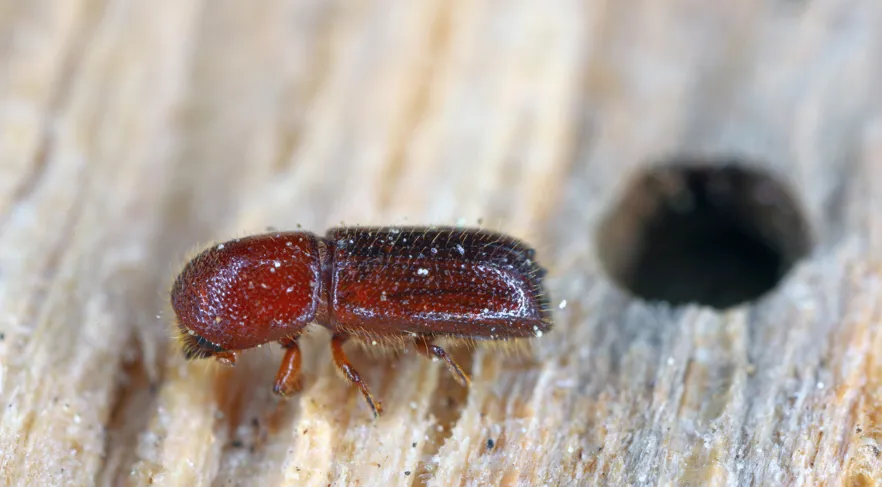
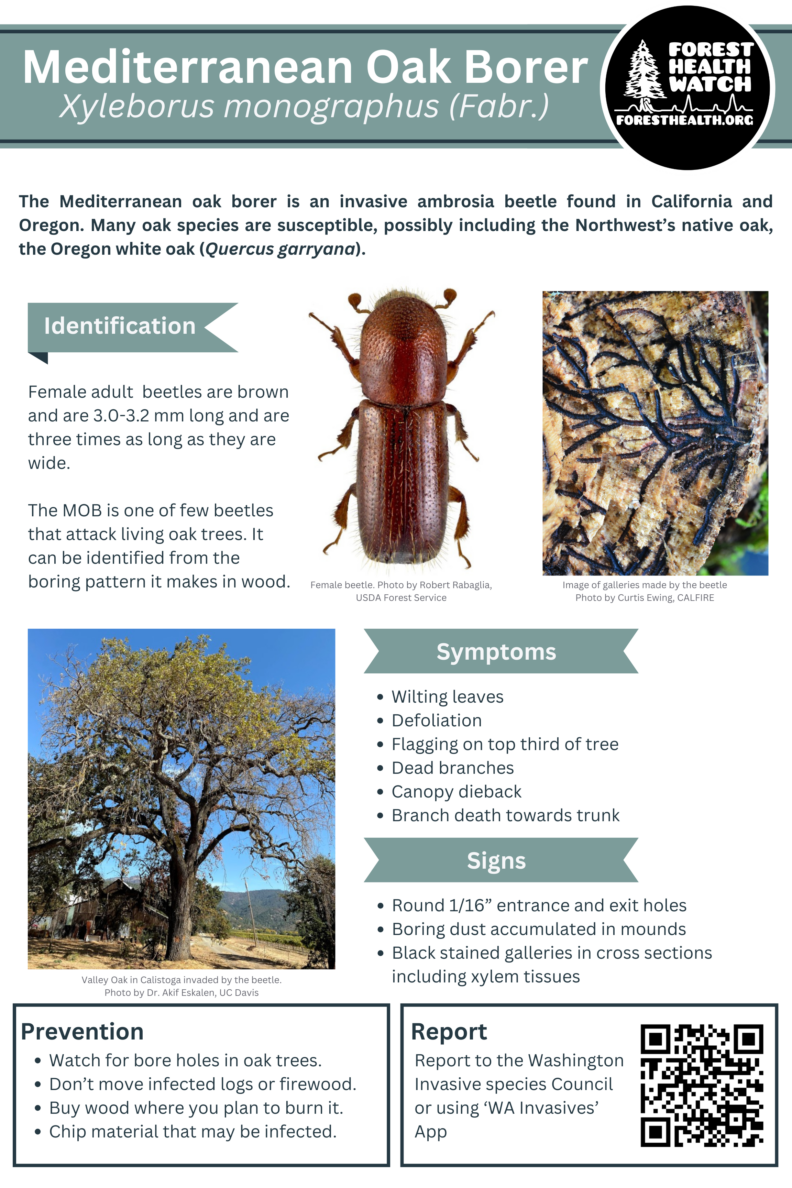
On affected oak, the Mediterranean Oak Borer will leave exit holes about 1/16″. Signs to look for on a tree experiencing Mediterranean Oak Borer infestation are black-stained galleries in the cross sections, branch & twig dieback, yellow, sparse or stunted foliage in the tree’s upper crown.

Photo by Tim Carl, 2024
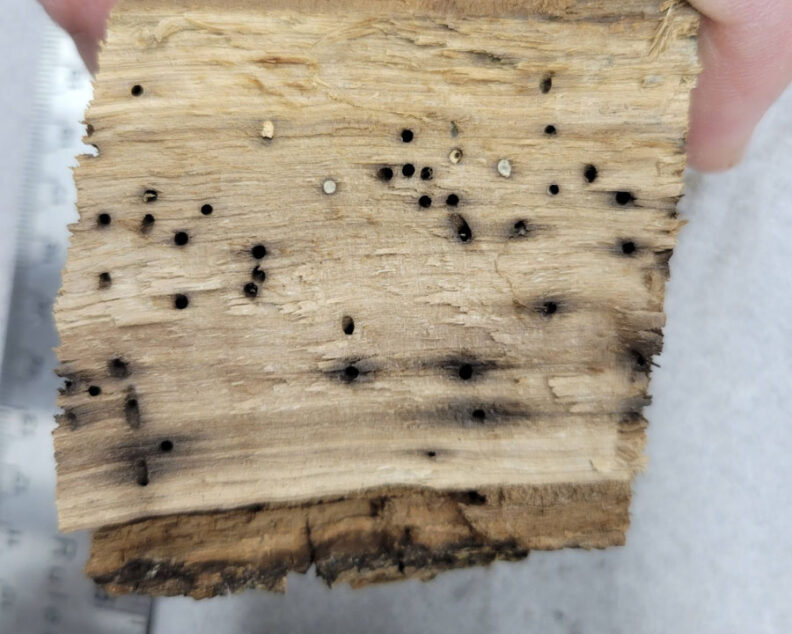
photo by Oregon Department of Forestry
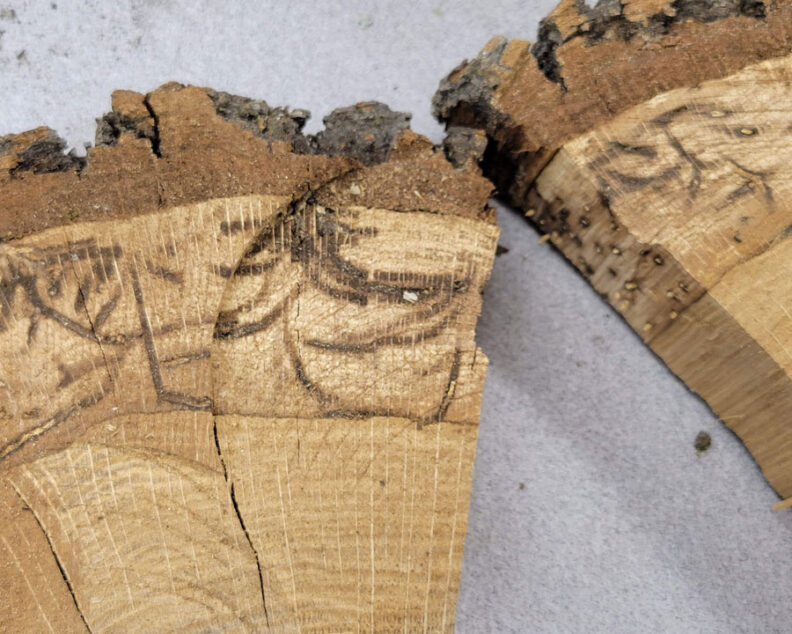
photo by Oregon Department of Forestry