Japanese Cedar Longhorned beetle
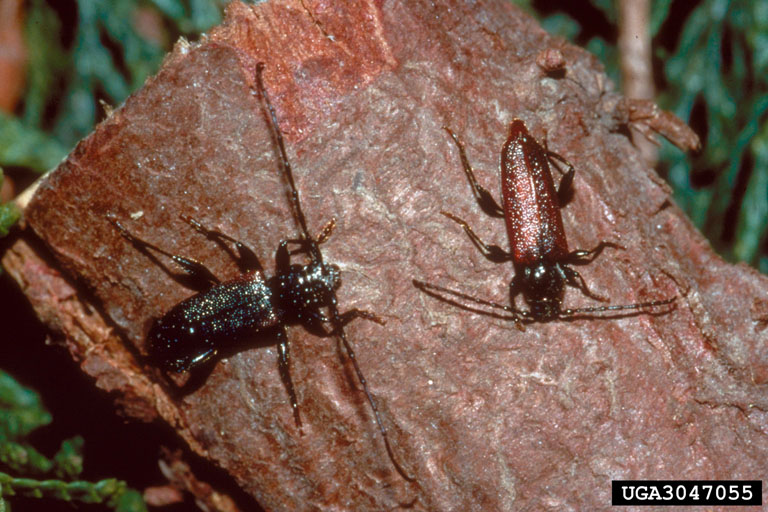
Introduction
The Japanese cedar longhorned beetle (JCLB), Callidiellum rufipenne, is an introduced wood-boring insect that bores into trees of the taxodium and cypress families. It is native to east Asia, but was found on the east coast of the U.S. in 1997 in North Carolina. JCLB was recently found in the Pacific Northwest in Portland, Oregon in May 2023.
Females lay eggs in bark crevices. Hatched larvae enter the bark and carve shallow galleries, feeding on the phloem and cambium layers. Mature larvae then enter the xylem to begin pupation. They overwinter in the tree then emerge as adults in early spring. Adult JCLBs have an approximate lifespan of 20 days, and females usually lay eggs 1-3 days after emergence from host trees.
JCLB is known to infest weakened trees, but there are instances of the insect boring into healthy nursery stock. With its preference for cedars and ornamental arborvitae trees, this insect is a great concern for our trees in the Northwest.
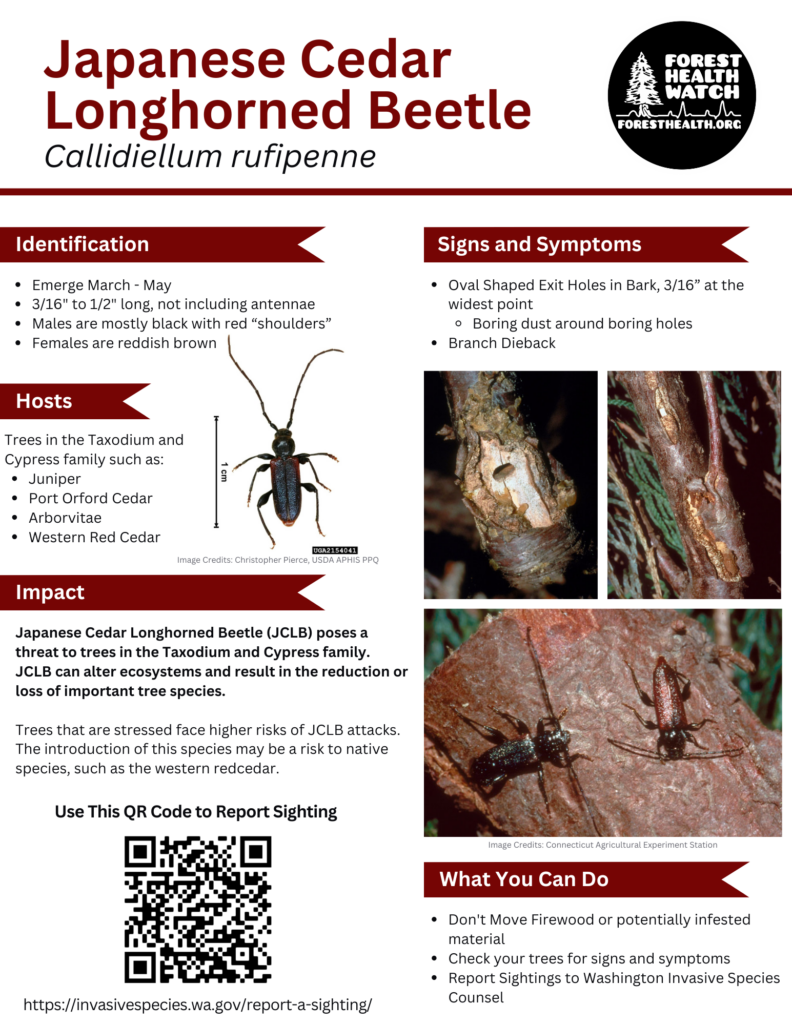
What to look for
Infested trees will have branch dieback. Look for galleries or boring dust around oval shaped exit holes.
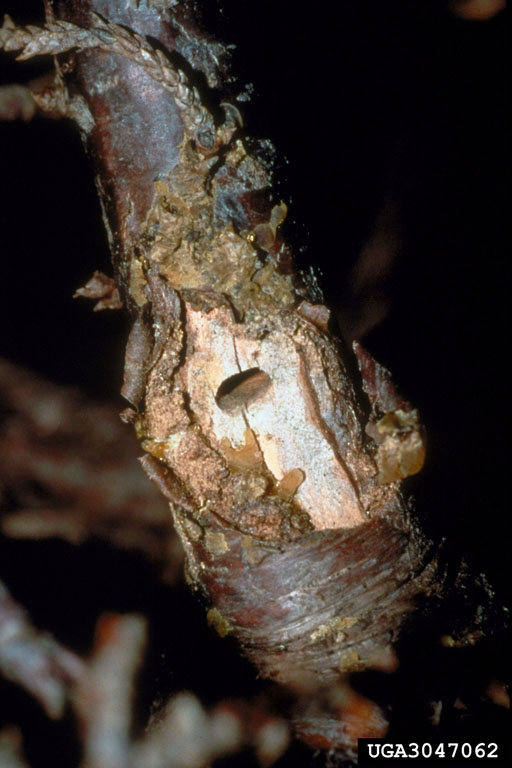
photo by Connecticut Agricultural Experiment Station
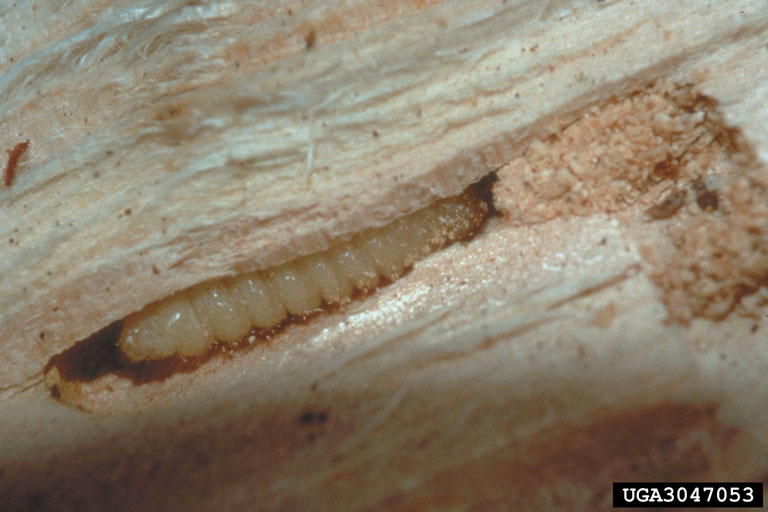
photo by Connecticut Agricultural Experiment Station
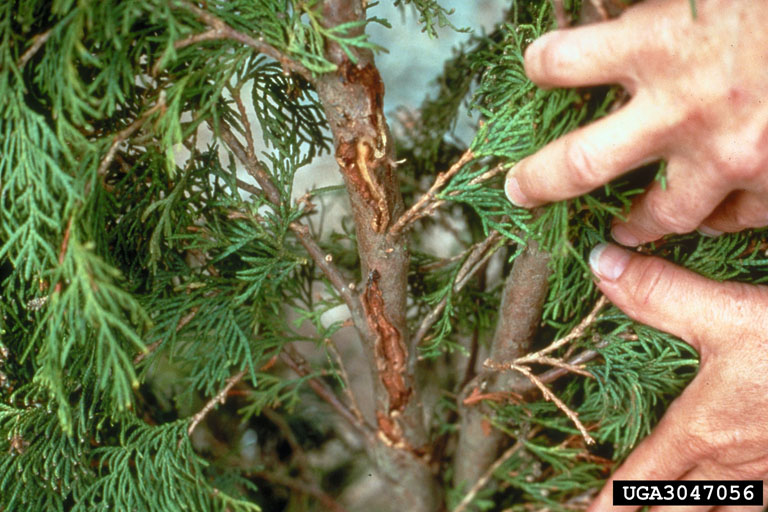
photo by Connecticut Agricultural Experiment Station